Exercise 5.1
If you visualise the maps of the Indian subcontinent of the second and first millennium BCE, you will find more settlements concentrated in the Ganga region in the latter map. Archaeological findings from this region during the first millennium BCE provide increasing evidence of the use of iron implements, a wider variety of grain, and the characteristic PGW pottery. Further, in the second half of the first millennium BCE, particularly in the middle Ganga region (from present-day Prayagraj to eastern Bihar), there is evidence of a refined ‘deluxe ware’ called NBPW, known for its smooth, glossy black surface. Archaeologically, this phase marks the emergence of a richer, more advanced material culture. Literary sources from this period also contain numerous references to expanding agricultural activities, increased grain output, greater crop variety—particularly paddy—and the use of iron implements. Can you identify the crucial factors behind this change?
The book prints no answer for this
NCERT publishes no answers for this textbook, so there is nothing in the book to check this working against. It has also not yet been read through by hand.
The crucial factor was iron — iron implements made it possible to clear and plough the heavy, forested Ganga plains.
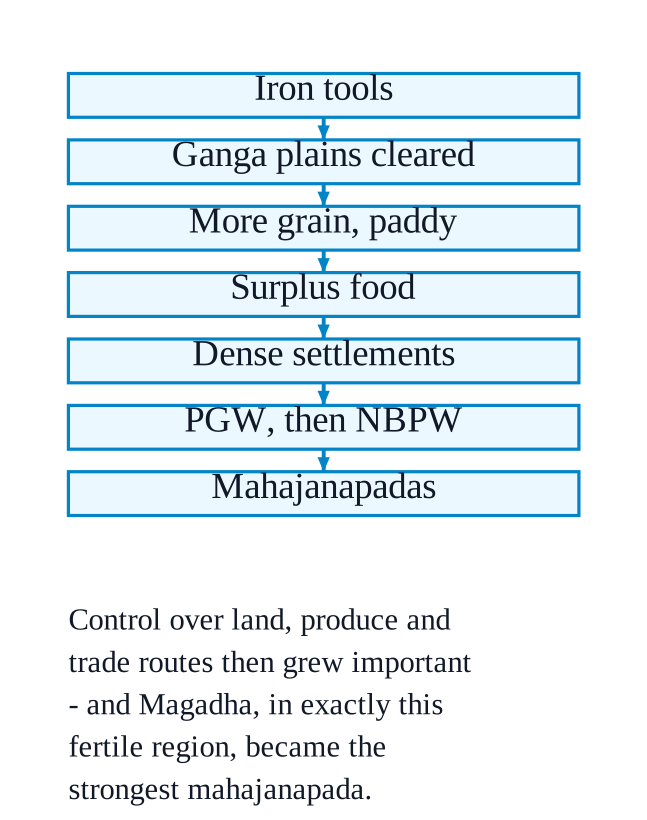
That produced more food: expanding agricultural activity, higher grain output and a greater variety of crops, especially paddy, which both archaeology and the literary sources record.
A dependable surplus let far more people live in one place, which is why settlements cluster in the Ganga region on the later map.
More people and more surplus meant a richer material culture — first the characteristic PGW pottery, then the glossy 'deluxe ware' NBPW of the middle Ganga region from Prayagraj to eastern Bihar.
Surplus also had to be controlled, so control over land, agricultural production and trade routes became important, and administrative systems grew more complex.
Together these changes turned kin-based janas into territory-based janapadas and then mahājanapadas — and Magadha, in exactly this fertile region, became the strongest of them.