Exercise 3.4
White Blood Cells (WBCs) collect at infected areas, causing pus formation and inflammation (causing redness and swelling, and possible pus formation at the infected area). WBC Platelets RBCs
Not cross-checked
NCERT prints no numerical answer for this exercise, so this working has not been cross-checked against the book.
An infected patch of skin turns red and swollen because White Blood Cells (WBCs) collect there.
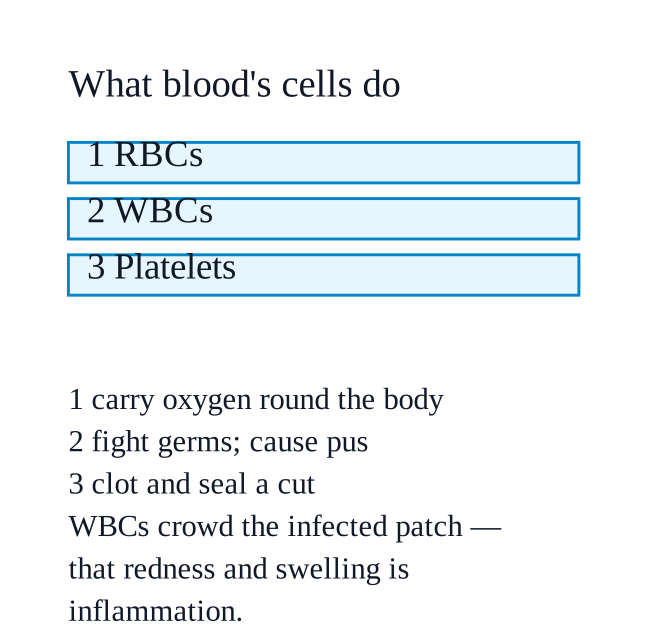
WBCs gather at the infected area to fight the germs; this gives inflammation — the redness and the slight swelling — and possibly pus.
Fever may go with it, as the body responds to the infection.
WBCs are one of the formed elements of blood, alongside RBCs and platelets, which together make up \(\displaystyle 45\% \) of blood volume.
Note how the three formed elements divide the labour: RBCs carry oxygen, platelets seal wounds, WBCs fight infection — division of labour inside a single tissue.