Exercise 3.1
You may have noticed that fibres of coconut husk are hard and brittle, whereas the leaf stalks of coriander are soft and flexible. Find out the reason. Xylem fibre Tracheid Xylem parenchyma Vessel Phloem parenchyma Sieve tube Sieve pore Companion cell (b) phloem Phloem Epidermal tissue Epidermal tissue Xylem
Not cross-checked
NCERT prints no numerical answer for this exercise, so this working has not been cross-checked against the book.
Coconut husk fibres are made of sclerenchyma, while coriander leaf stalks are made of collenchyma (with parenchyma).
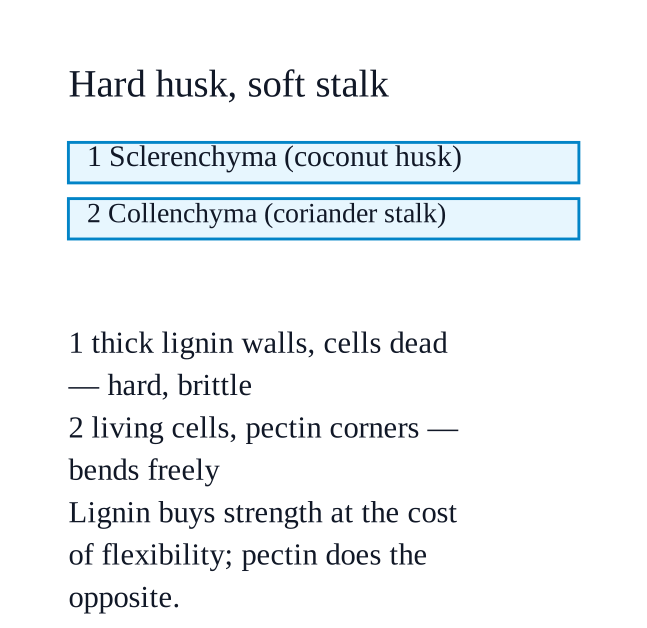
Sclerenchyma cells have thick walls due to deposition of lignin, which makes them hard and strong, and most of these cells are dead.
A dead, lignified, rigid wall cannot give way, so the fibre resists bending and finally snaps — hard and brittle.
The chapter places coconut husk here itself, alongside walnut shell, as a hard covering made of sclerenchyma.
Collenchyma cells are living, with their corners unevenly thickened by pectin — a chemical the chapter compares to rubber for the flexibility it gives.
That uneven, unlignified thickening supports the stalk yet still lets it bend without breaking, so the coriander stalk stays soft and flexible.
Same job (support), two different materials: lignin buys strength at the cost of flexibility; pectin buys flexibility at the cost of strength.