Exercise 10.1
Explore various ways of producing sound.
Not cross-checked
NCERT prints no numerical answer for this exercise, so this working has not been cross-checked against the book.
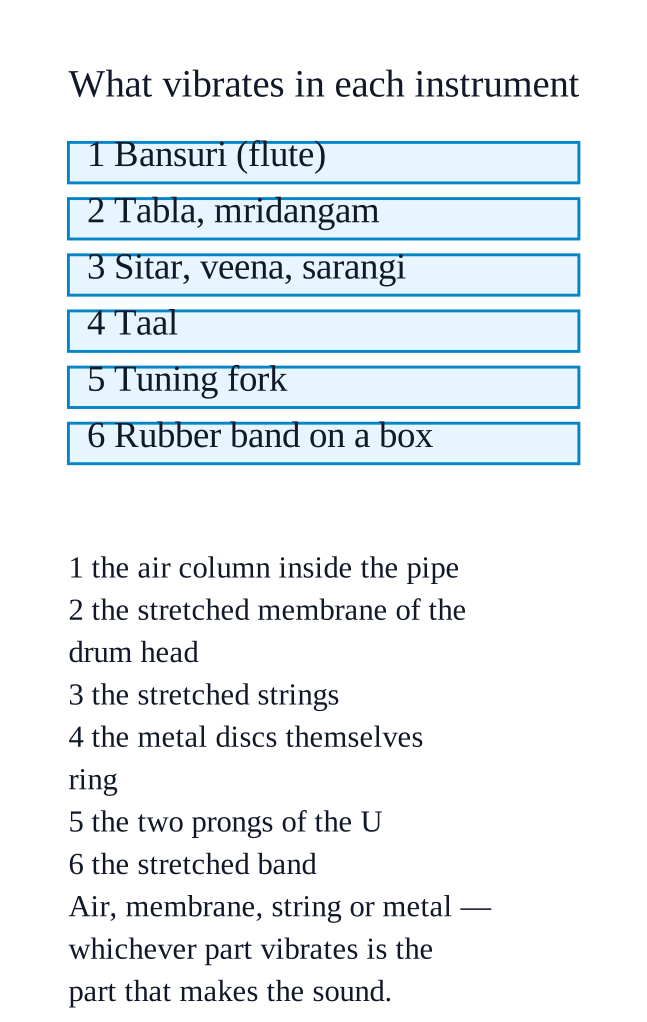
Sound is produced whenever something vibrates — every method below is just a different way of setting an object vibrating.
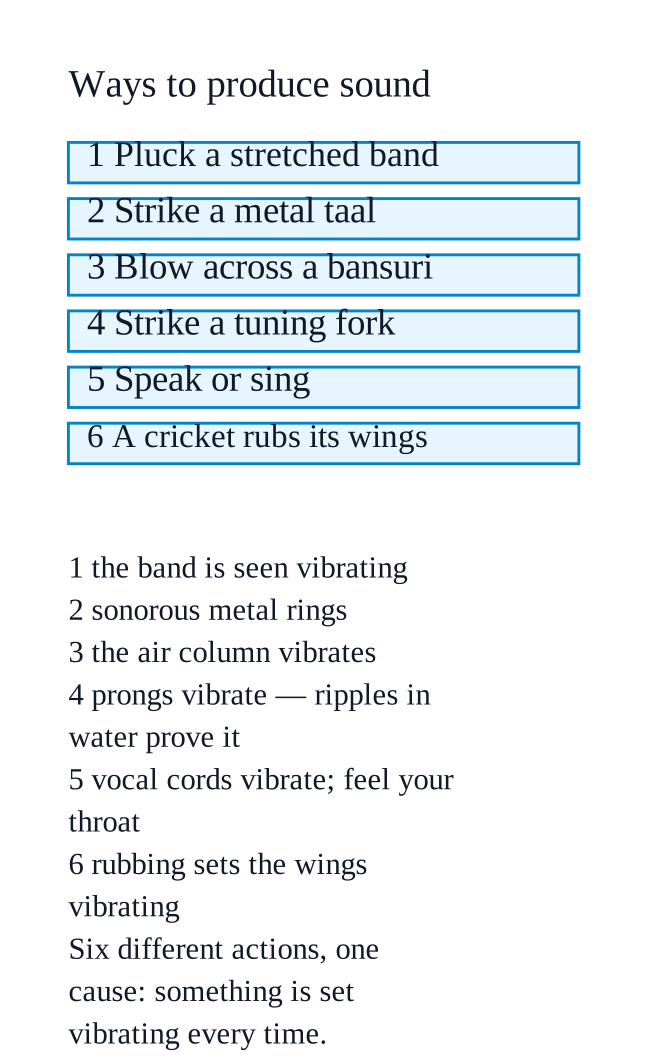
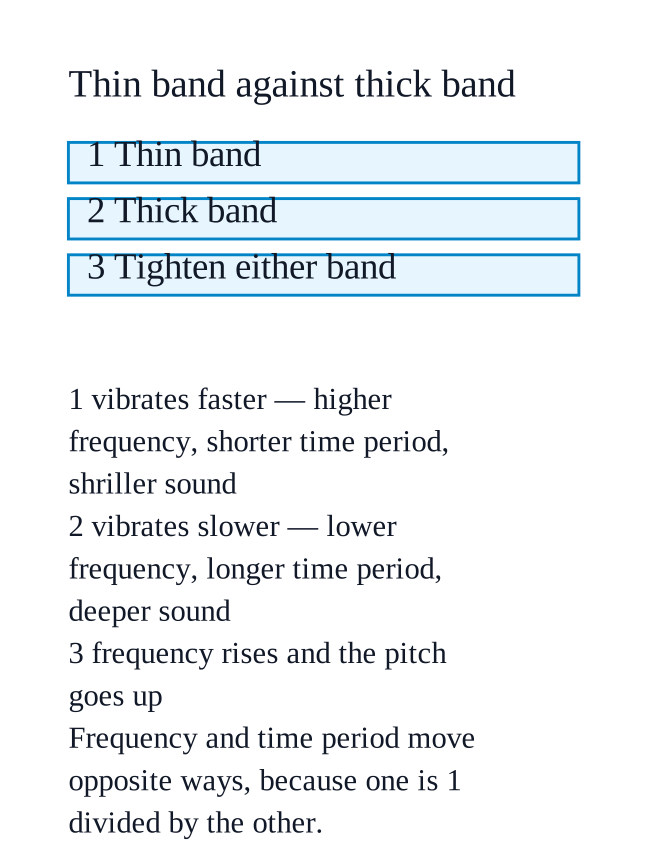
Plucking a stretched band or string — stretch a rubber band across an open cardboard box and pluck it (Activity $\displaystyle 10.1$); the band is seen vibrating, and the moment the vibration stops, so does the sound.
Striking a metal object — a taal or any sonorous metal rings when struck.
Blowing across an air column — in a bansuri the air inside the hollow pipe vibrates.
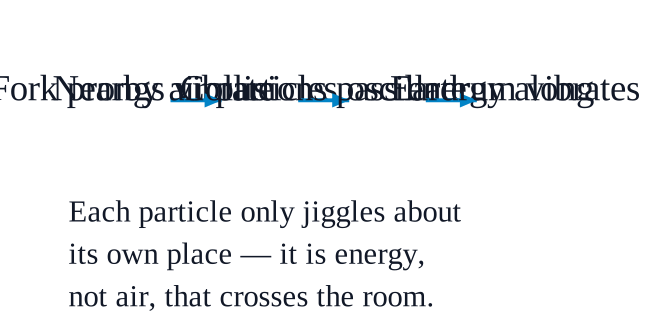
Striking a tuning fork on a rubber pad — the prongs vibrate; touch a prong to water and ripples spread out, proving the vibration (Activity $\displaystyle 10.2$).
Using the vocal cords — talking or singing vibrates the stretched flaps in the larynx; touch your throat while you speak and feel it.
Rubbing body parts — grasshoppers and crickets rub their wings or legs together.
Knocking, scratching or tapping — knock a desk (Activity $\displaystyle 10.3$), or tap two spoons together in air and again under water (Activity $\displaystyle 10.4$).
Rapid expansion of heated gas — a firecracker or a clap of thunder heats gas so fast that the sudden density disturbance is heard as a loud pulse.
Common thread: in every case the vibrating object is the source, and the sound ends when the vibration ends.