Exercise 11.11
In many animals, the young ones can walk or find food soon after birth but human babies are completely dependent on adults for a long time. What might be some advantages and disadvantages of this for humans as a species? Exploration|Grade
Not cross-checked
NCERT prints no numerical answer for this exercise, so this working has not been cross-checked against the book.
Advantage — a long dependent childhood is a long period of protected learning: the chapter notes that mammals feed their young on breast milk after birth and that newborns must be kept warm, vaccinated on time and handled gently, and this constant care keeps survival high.
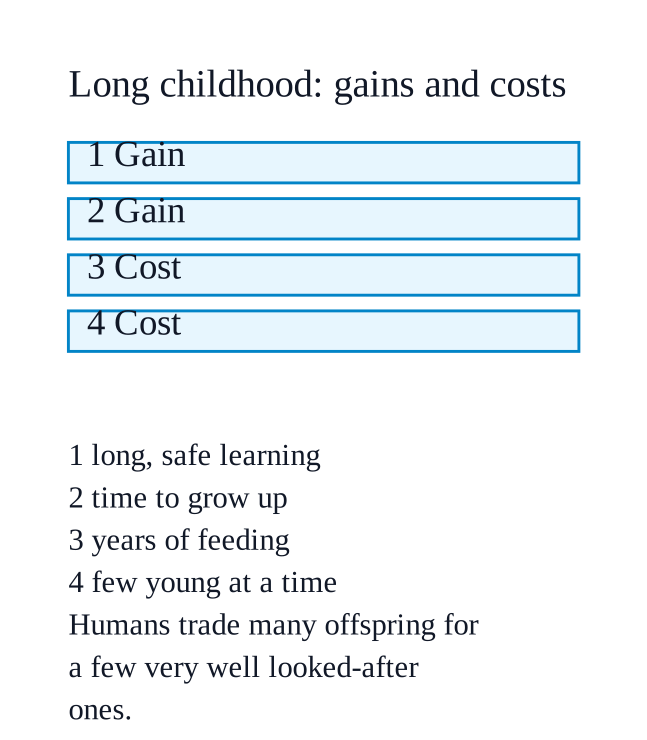
Advantage — it gives time for emotional and social maturity, which the chapter says develops much more slowly than sexual maturity; skills like handling feelings, communicating and making thoughtful decisions are learnt from adults over years.
Advantage — because so much is invested in each child, most children survive, so humans do not need to produce young in huge numbers the way externally fertilising animals do.
Disadvantage — the cost to the parents is heavy: food, time, shelter and protection for years, so a human family can raise only a few young at a time.
Disadvantage — a baby that cannot walk or feed itself cannot escape danger or find food on its own, so it is entirely at risk if the adults caring for it are lost.
Disadvantage — the population therefore grows slowly compared with species whose young are independent at birth.