Exercise 2.7
Which of the following pairs of cell organelles contains DNA? (i) Chloroplasts, Ribosomes (ii) Mitochondria, Nucleus (iii) Golgi bodies, Ribosomes (iv) Nucleus, Lysosomes
Not cross-checked
NCERT prints no numerical answer for this exercise, so this working has not been cross-checked against the book.
NCERT’s answer
(ii)
(ii) Mitochondria, Nucleus.
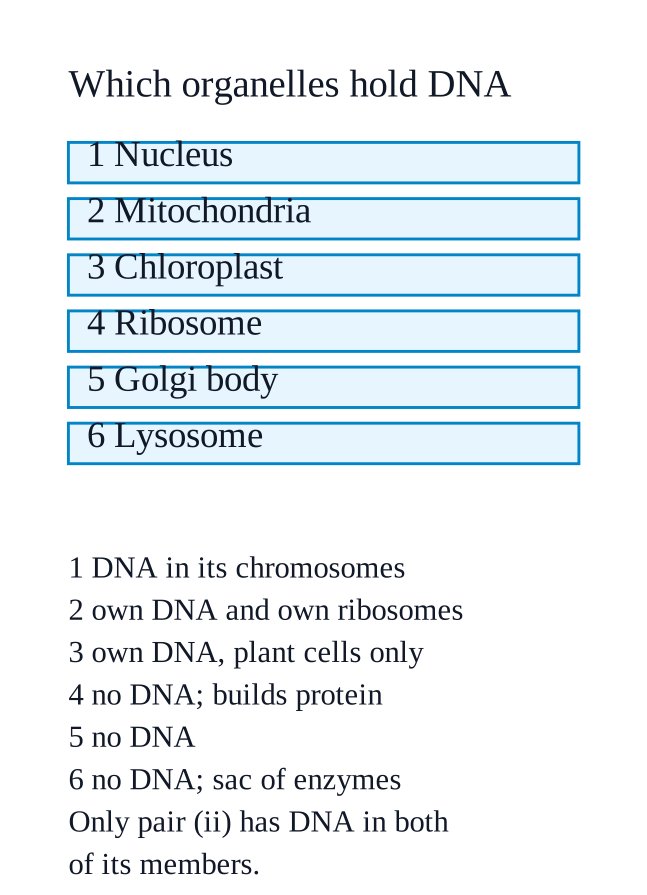
Nucleus — it contains chromosomes, and chromosomes are composed of DNA and specific proteins; the functional segments of that DNA are the genes.
Mitochondria — they have their own DNA and their own ribosomes, which is exactly why they can make some of their own proteins.
(i) fails on the ribosome. A chloroplast does contain DNA, but a ribosome does not — it is the site where protein is assembled, not where genetic information is kept. One member of the pair is enough to spoil it.
(iii) fails on both members: neither Golgi bodies nor ribosomes contain DNA.
(iv) fails on the lysosome — it is a single membrane-bound sac of digestive enzymes, with no DNA.