✓ Board-verified
Social Science · 2025 · 5 marks
CBSE 2025 · Region 5 · Set 1 · Q31
(a) Study the given flow chart and answer the question that follows: Explain the added value product in the textile industry on the bases of above…
Study the given flow chart and answer the question that follows :
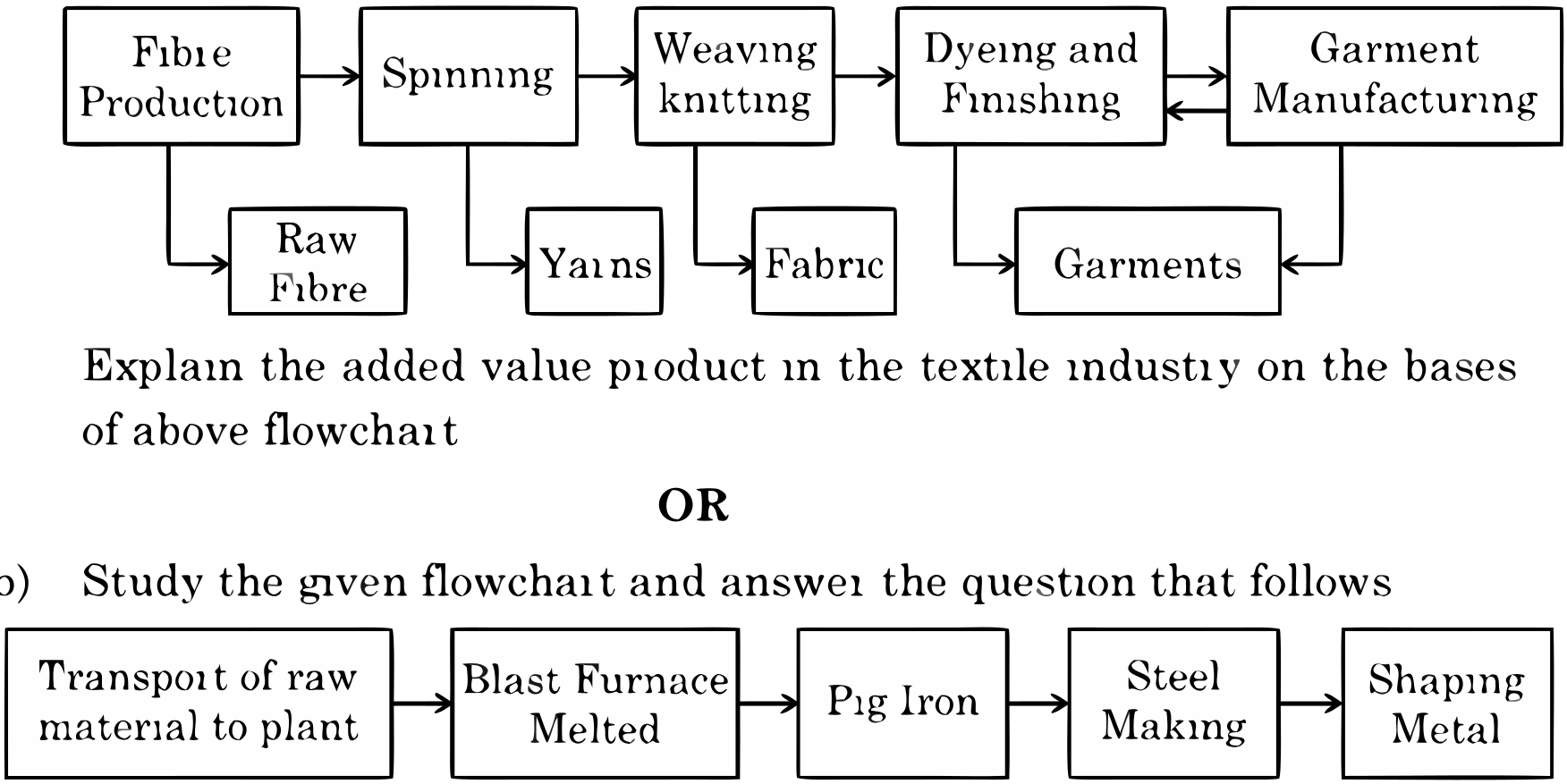
Explain the added value product in the textile industry on the bases of above flowchart.
Study the given flowchart and answer the question that follows : Explain the steel manufacturing process on the bases of the above flowchart.
Marking-scheme solution
(i) Cotton is harvested from cotton plants and processed to remove seeds and impurities. The raw fibre obtained is the initial stage of value addition.
(ii) The raw cotton fibre is spun into yarns through various spinning techniques. It enhances the usability of cotton by making it suitable for weaving or knitting.
(iii) The spun yarn is woven or knitted to create fabric. This step transforms the material into a more functional form, adding value by making it suitable for further processing.
(iv) The fabric undergoes dyeing, printing, and finishing processes to improve its aesthetic appeal, durability, and texture. This increases the fabric's market value and makes it ready for garment production.
(v) The finished fabric is cut and stitched into garments such as shirts, dresses, or jeans making it ready for consumers.
(vi) Cotton industry, by creating demands supports many other industries, such as chemicals and dyes.
(b) Study the given flowchart and answer the question that follows: Explain the steel manufacturing process on the bases of the above flowchart.
(i) Raw materials like iron ore, coal, and limestone are transported to the steel plant. (Example: Iron ore from mines in India (like Odisha or Jharkhand) is transported to steel plants).
(ii) The raw materials are fed into a blast furnace, where they are melted at high temperatures. (Example: In steel plants, coke is used as fuel to melt iron ore).
(iii) The molten iron extracted from the blast furnace is called pig iron, which is high in carbon content and not yet steel. (Example: Pig iron is used for refining steel).
(iv) The pig iron is processed in steel-making furnaces to reduce impurities and adjust its composition. (Example: Companies produce different grades of steel for various industrial uses).
(v) The purified steel is then shaped into desired forms like sheets, rods, or beams through rolling, forging, or casting. (Example: Steel is used to manufacture construction materials, automobile parts, etc.).
More from Manufacturing Industries
- Describe the role of manufacturing industries in the economic development of a country. OR Describe any five steps taken to save fresh water from…2024
- How are industries the main source of water pollution? Mention any two suggestions for the conservation of water. OR How are industries the main…2024
- "The economic strength of a country is measured by the development of manufacturing industries." Support the statement with appropriate arguments. OR…2026
- Suggest any three ways to protect fresh water from industrial pollution.2024
- Who of the following set up the first Iron and Steel industry in India?2023
- Read the given case and answer the questions that follow: Challenges faced by the Jute industry include stiff competition in the international market…2022
- Study the given flowchart and answer the questions that follow: (5.1) Which is the basic material required for garment manufacturing? (5.2) Give one…2022
- How is chemical industry in India diversified? Explain.2022
CBSE Class 10 Social Science past-paper question from the 2025 board exam, with the answer as CBSE’s own marking scheme gives it. Where our answers come from.