✓ Board-verified
Biology · 2023 · 5 marks
Sexual Reproduction in Flowering PlantsPre-fertilisation: Structures and Events5 marksUnderstandlong answer
CBSE 2023 · Region 1 · Set 1 · Q33
(a) Study the diagram given below showing the modes of pollination. Answer the questions that follow. (i) The given diagram shows three methods of…
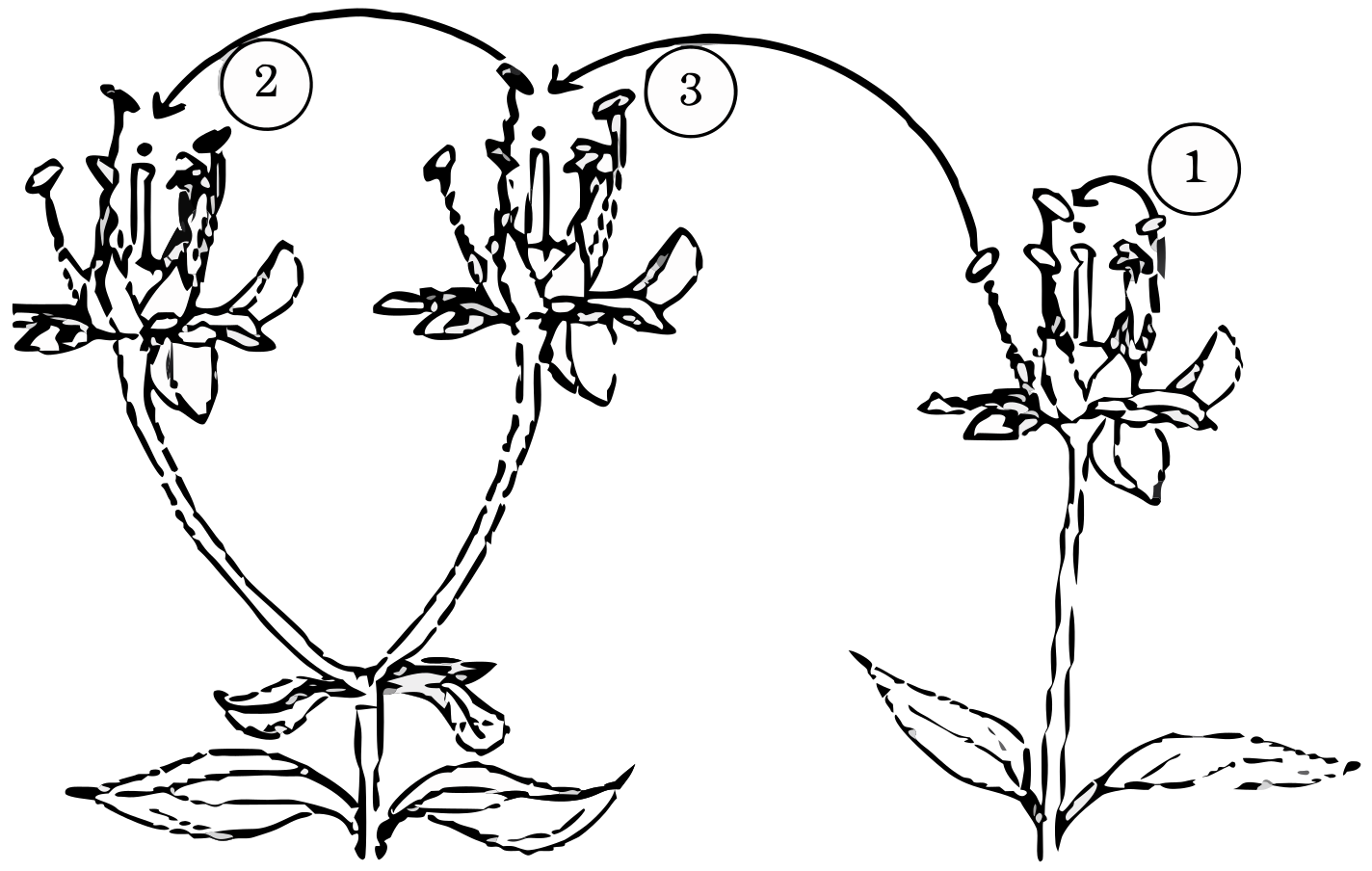
Study the diagram given below showing the modes of pollination. Answer the questions that follow.
(i)
The given diagram shows three methods of pollen transfer in plants. What are the technical terms used for pollen transfer methods '$\displaystyle 1$', '$\displaystyle 2$' and '$\displaystyle 3$' ?
(ii)
How do the following plants achieve pollination successfully?
(1)
Water lily
(2)
Vallisneria
(iii)
Flowering plants have developed many devices to avoid inbreeding depression. Explain one hereditary and one physiological device which helps plants to achieve this target.
Observe the diagram given below showing the menstrual cycle of a normal human female and answer the questions that follow :
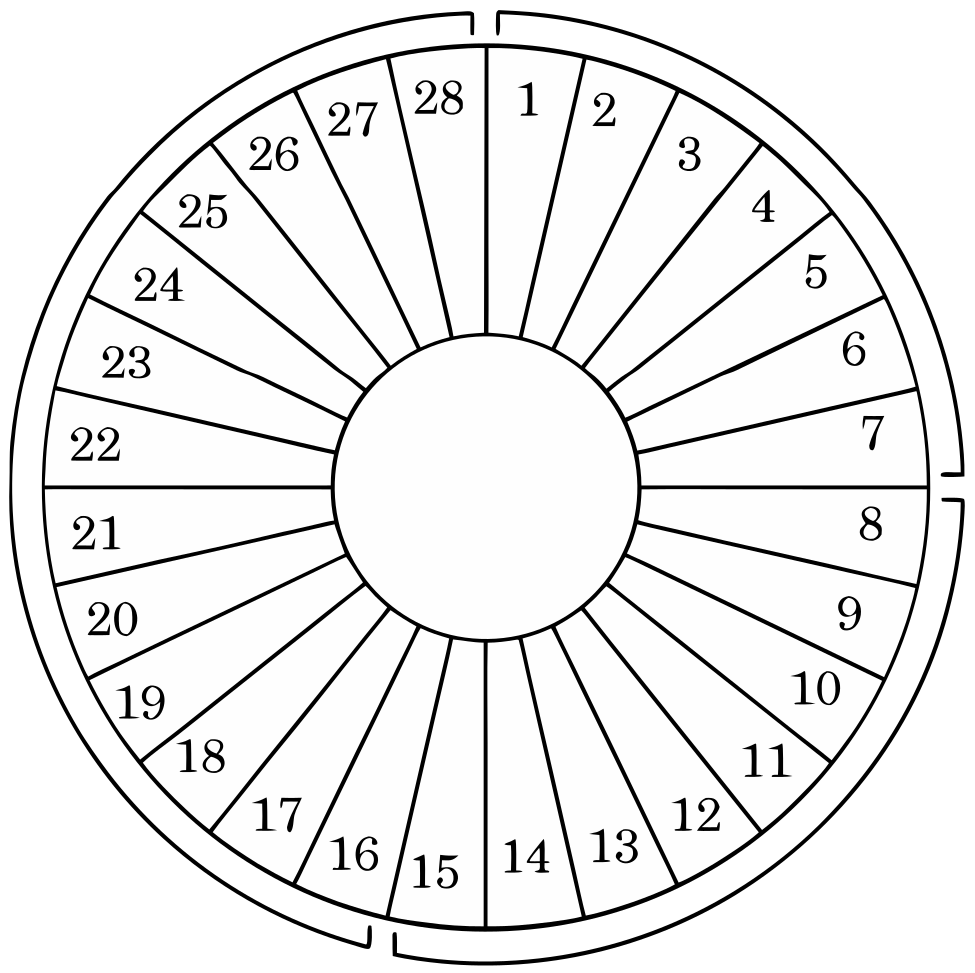
Numbers indicate the days of the menstrual cycle
(i)
What are the suitable technical terms used for the following?
(1)
Days $\displaystyle 1$ – $\displaystyle 7$
(2)
Days $\displaystyle 8$ – $\displaystyle 12$
(3)
Days $\displaystyle 16$ – $\displaystyle 28$
(4)
Days $\displaystyle 13$ – $\displaystyle 15$
(ii)
Explain the role of ovarian and pituitary hormones during the following time periods :
(1)
Days $\displaystyle 8$ – $\displaystyle 12$
(2)
Days $\displaystyle 13$ – $\displaystyle 15$
(3)
Days $\displaystyle 16$ – $\displaystyle 28$
Marking-scheme solution
(a) (i) ($\displaystyle 1$) Autogamy
(2) Geitonogamy
(3) Xenogamy
(ii) ($\displaystyle 1$) Water lily: pollinated by insects/wind.
(2)
Vallisneria : Female flowers on long stalks reach water surface male flowers or pollen released on water and carried by water current to female flowers to achieve pollination.
(iii) Genetic : Self-incompatibility / prevents self-pollen (same flower or other flowers of same plant) from fertilizing the ovules by inhibiting pollen germination, pollen tube growth in pistil.
Physiological : Pollen release and stigma receptivity are not synchronized, either pollen matures earlier and stigma later or pollen matures later than stigma.
(b)
(1)
Menstrual period
(2)
Follicular phase/proliferative phase
(3)
Luteal phase/secretory phase
(4)
Ovulatory phase
(ii)
| Days | Ovarian hormones | Pituitary hormones |
| $\displaystyle 8$-$\displaystyle 12$ | Follicular growth / proliferation of endometrial cells. | Simulates follicular Development/ secretion of estrogen by growing follicles |
| $\displaystyle 13$-$\displaystyle 15$ | Maturation of ovarian follicles/ formation of graafian follicles / thickening of endometrium. | Rupture of graafian follicle to release ovum. |
| $\displaystyle 16$-$\displaystyle 18$ | Maintenance of endometrium | Secretion of progesterone from corpus luteum. |
All Sexual Reproduction in Flowering Plants questions2023 question paperNCERT solutions: Sexual Reproduction in Flowering PlantsPractice Sexual Reproduction in Flowering Plants →
More from Sexual Reproduction in Flowering Plants
- Choose the option that gives the correct number of pollen grains that will be formed after 325 microspore mother cells undergo microsporogenesis.2026 · asked 2×
- In which one of the following floral plants are many embryos formed in the seeds without fertilisation of the egg cell?2024
- Explain the process of the development of a male gametophyte in an angiosperm. Why is it called a male gametophyte?2023
- In angiosperms, the female gametophyte develops from a single cell of megasporangium. (i) Name that cell of megasporangium and describe the…2026
- Some flowers are unisexual, this property of unisexuality of flowers prevents which kind of pollination?2025
- The ploidy of apomictic embryos developing from the nucellus and antipodal cells respectively would be:2024
- Given below are stages of embryo sac formation from megaspore mother cell. Identify the correct option for the cell division marked a, b, c and d.2026
- Draw a T.S. of a mature anther of an angiosperm. Label its any three wall layers and mention their functions.2024
CBSE Class 12 Biology past-paper question from the 2023 board exam, with the answer as CBSE’s own marking scheme gives it. Where our answers come from.