✓ Board-verified
Biology · 2023 · 5 marks
CBSE 2023 · Region 3 · Set 2 · Q32
(a) Given below is a diagrammatic representation of a human ovum. (i) Identify the parts 'a', 'b' and 'c'. (ii) This ovum is released from the ovary…
Given below is a diagrammatic representation of a human ovum.
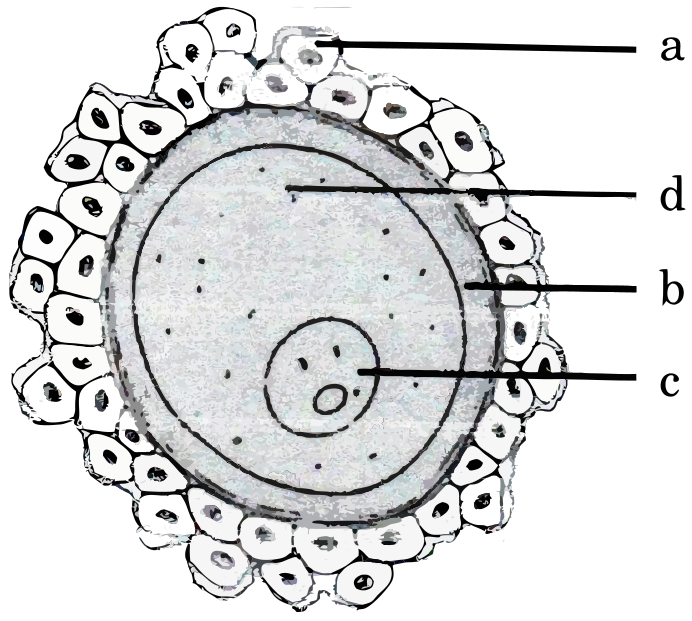
(i)
Identify the parts 'a', 'b' and 'c'.
(ii)
This ovum is released from the ovary with incomplete meiotic division. When, where and how is the meiotic division completed ?
(iii)
How does an ovum ensure the entry of a single sperm during fertilisation?
(i)
Double fertilisation is an event unique to all flowering plants. Explain the process.
(ii)
Give a reason for the following :
(1)
A seed of an orange has many embryos.
(2)
Cashew is a false fruit but Guava is a true fruit.
Marking-scheme solution
a - Cells of corona radiata.
b - Zona pellucida /Perivitelline space
c - Haploid nucleus
Once the sperm enters the cytoplasm of the ovum
The whole process is completed within the fallopian tube.
Entry of sperm in the cytoplasm of the ovum induces the completion of the 2nd meiotic division of the secondary oocyte, it is unequal division and results in formation of a second polar body and a haploid ovum(ootid).
During fertilisation as the sperm comes in contact with the zona pellucida layer of the ovum, it induces changes in the membrane, that block the entry of any additional sperms.
(b)
Double fertilisation is the occurrence of two types of fusion syngamy and triple fusion in an embryo sac of the angiosperm.
Syngamy- Fusion of one of the male gamete and the egg cell resulting in formation of a zygote (diploid).
Triple fusion - Fusion of another male gamete with two haploid polar nuclei to produce a (triploid) primary endosperm nucleus.
(ii)
(1) Some of the nucellar cells surrounding the embryo start dividing and protrude into the embryo sac to form embryos.
(2) In case of Cashew thalamus also contribute in fruit formation along with ovary /development of fruit after fertilisation from the part other than ovary, Guava fruit develops from the ovary after fertilisation.
All Sexual Reproduction in Flowering Plants questions2023 question paperNCERT solutions: Sexual Reproduction in Flowering PlantsPractice Sexual Reproduction in Flowering Plants →
More from Sexual Reproduction in Flowering Plants
- Choose the option that gives the correct number of pollen grains that will be formed after 325 microspore mother cells undergo microsporogenesis.2026 · asked 2×
- In which one of the following floral plants are many embryos formed in the seeds without fertilisation of the egg cell?2024
- Explain the process of the development of a male gametophyte in an angiosperm. Why is it called a male gametophyte?2023
- In angiosperms, the female gametophyte develops from a single cell of megasporangium. (i) Name that cell of megasporangium and describe the…2026
- Some flowers are unisexual, this property of unisexuality of flowers prevents which kind of pollination?2025
- The ploidy of apomictic embryos developing from the nucellus and antipodal cells respectively would be:2024
- Given below are stages of embryo sac formation from megaspore mother cell. Identify the correct option for the cell division marked a, b, c and d.2026
- Draw a T.S. of a mature anther of an angiosperm. Label its any three wall layers and mention their functions.2024
CBSE Class 12 Biology past-paper question from the 2023 board exam, with the answer as CBSE’s own marking scheme gives it. Where our answers come from.