✓ Board-verified
Science · 2025 · 5 marks
CBSE 2025 · Region 3 · Set 1 · Q35
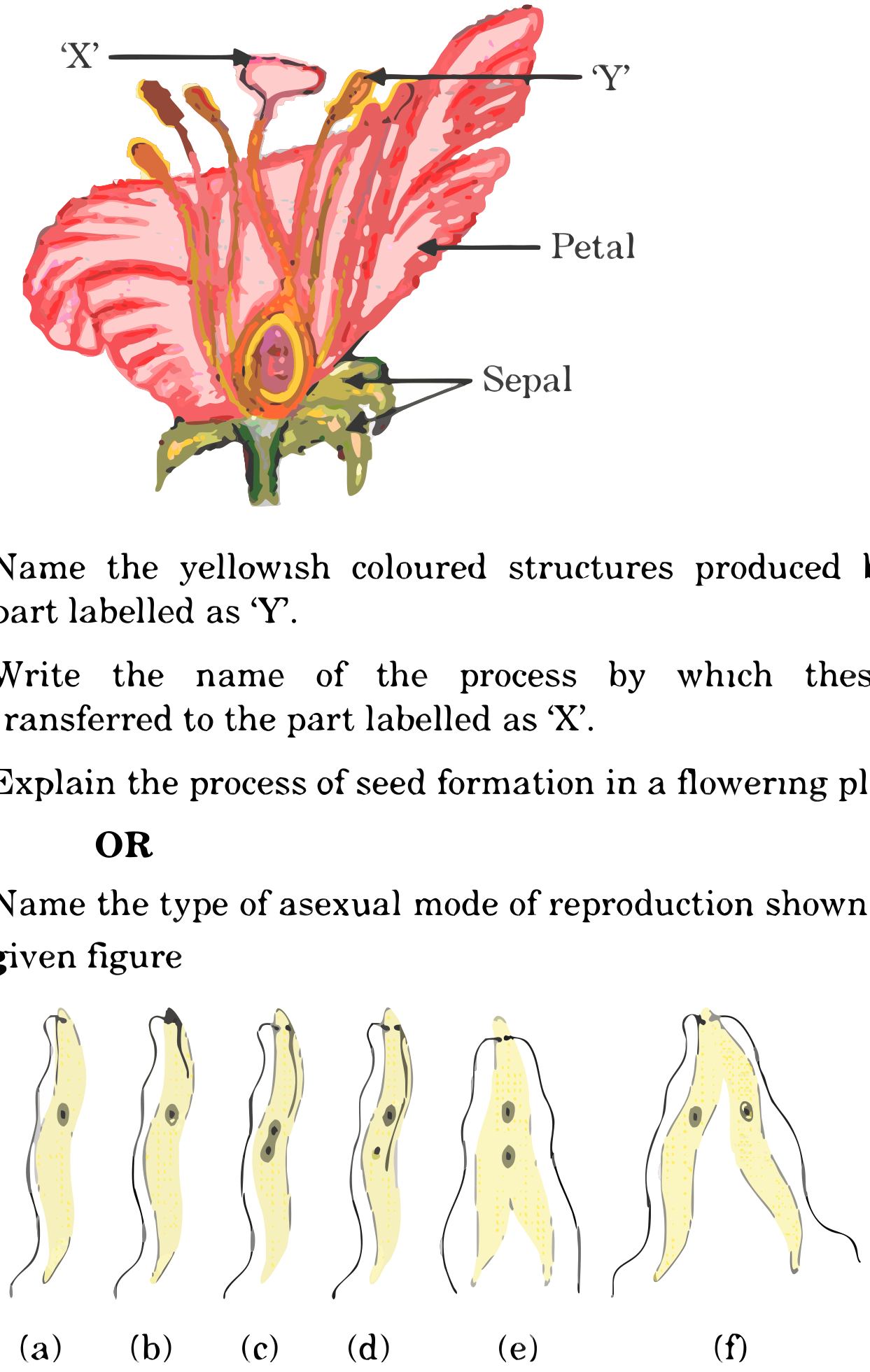
(a) (i) Identify the parts 'X' and 'Y' in the figure given below: (ii) Name the yellowish coloured structures produced by the part labelled as 'Y'.…
(i)
Identify the parts 'X' and 'Y' in the figure given below :
(ii)
Name the yellowish coloured structures produced by the part labelled as 'Y'.
(iii)
Write the name of the process by which these are transferred to the part labelled as 'X'.
(iv)
Explain the process of seed formation in a flowering plant.
(i)
Name the type of asexual mode of reproduction shown in the given figure.
(ii)
Identify the unicellular organism in the diagram.
(iii)
List any two advantages of asexual reproduction over sexual reproduction.
(iv)
Name and explain any one mode of asexual reproduction observed in Hydra.
Marking-scheme solution
(i) 'X' - Stigma 'Y' - Anther
(ii) Pollen grains
(iii) Pollination
(iv) After the transfer of pollen grains from anther into stigma, a pollen tube grows out of the pollen grain and travels through the style to reach the ovary. Male germ cell fuses with the
female germ cell to form a zygote which divides several times to form an embryo within the ovule. The ovule develops a tough coat and is gradually converted into a seed.
(b)
Binary fission
(ii)
Leishmania
(iii)
Produces a greater number of offsprings within a short period of time /Ensures better chances of survival of organisms in unfavorable conditions/Formation of genetically similar organisms /gamete formation is not required.
(iv)
Budding
A bud develops as an outgrowth due to repeated cell division at a specific site, develop into tiny individuals, and after being matured, detach from parent body and become new independent individuals.
All How do Organisms Reproduce? questions2025 question paperNCERT solutions: How do Organisms Reproduce?Practice How do Organisms Reproduce? →
More from How do Organisms Reproduce?
- In the following figure showing a germinating gram seed, name the parts labelled as A, B and C: Why is part ' B ' considered to be important during…2022
- Explain the events that take place once a sperm reaches the oviduct till it becomes a foetus. Write the role of placenta in pregnancy.2024
- Differentiate between self-pollination and cross pollination. Which one of the two is better for the survival of species? Give reason to justify your…2025
- The number of chromosomes in parents and offspring of a particular species undergoing sexual reproduction remains constant due to:2026
- Assertion: Offsprings produced by asexual reproduction are genetically similar to the parents. Reason (R): Asexual reproduction involves a single…2024
- Yeast multiplies by which of the following methods?2026
- (i) Where are testes located in the human males and why? State two function of the testes. (ii) In the human female, one of the ovaries releases an…2023
- Which one of the two multicellular organisms - Spirogyra and Planaria reproduces by regeneration and why? Give an example of any other organism which…2022
CBSE Class 10 Science past-paper question from the 2025 board exam, with the answer as CBSE’s own marking scheme gives it. Where our answers come from.